
Criminal Cases in the McMinn County Courts
McMinn County criminal court cases can begin in one court and end in another. General Sessions Court conducts preliminary felony proceedings and may finally decide misdemeanors. When a felony is bound over or charged by indictment, the prosecution moves into Criminal Court for Tennessee's Tenth Judicial District. Athens and Etowah municipal courts, along with Niota city channels, handle city ordinance and traffic matters within their authority. Those city records do not replace a Sessions or Criminal Court file.
The McMinn County Circuit Court Clerk keeps Circuit, Criminal, General Sessions, Juvenile, and Traffic records at 1317 South White Street in Athens. The clerk prepares dockets and records filings, dispositions, sentences, fines, and costs. Call (423) 745-1923 before a visit if the case may be archived or if a certified copy is needed. The office posts weekday hours of 8:30 a.m. to 4:00 p.m., with a Friday lunch closure from noon to 1:00 p.m.
Follow a McMinn County Felony
A felony file may carry one General Sessions number at the preliminary stage and a different Criminal Court number after bind-over or indictment. That does not mean one record is false or duplicated. It reflects two court stages. Searchers should ask the clerk to trace both parts using the name, an approximate arrest or filing date, and any known number.
The General Sessions Court page confirms its local role, while the county's criminal and circuit judges page identifies the Tenth Judicial District bench. These official pages also give context for the five McMinn County case images shown below. The court split explains why a lone docket may not reveal the full path from complaint through final judgment.
The official clerk page shows the local calendar and court contact route.

Use that source to confirm counter details before seeking a McMinn County criminal case record.
Note: General Sessions handles the preliminary felony stage; an indictment shifts the prosecution to Criminal Court.
How to Search Case Records
There is no verified public name-search form for McMinn County trial cases, and Tennessee's Integrated Criminal Justice Portal is restricted to registered agencies. The public route is a focused phone or counter request to the clerk. Ask about General Sessions and Criminal Court separately. Older files may need advance retrieval, and the official page does not publish a dependable fee for plain or certified criminal copies.
- Call (423) 745-1923 or visit the clerk at 1317 South White Street.
- Give the known case number, or provide the defendant name with a narrow date range.
- Specify General Sessions, Criminal Court, or both stages when a felony may have moved.
- Ask for the docket, charging instrument, disposition or judgment, sentence, and public ledger as needed.
- Confirm delivery choices and request certification only when the record's recipient requires it.
The clerk has no public online form fields, so these are the useful request identifiers rather than portal controls.
| Field Label | Type | Required | Notes |
|---|---|---|---|
| Case number | Identifier | No | Best key when known |
| Defendant name | Text | Usually | Pair with a narrow date range |
| Filing or arrest date | Date range | No | Helps distinguish similar names |
| Court division | Request detail | No | Specify Sessions, Criminal, or both |
| Document type | Request detail | No | Docket, judgment, sentence, or ledger |
Ask how the clerk can deliver the selected documents. The official page does not promise email or mail service for each record, so confirm the method before paying or traveling. Plain copies may be enough for personal review. A certified copy bears the clerk's formal certification and is usually needed only when another office specifically asks for it. McMinn County has not published a dependable current criminal-copy fee on the clerk page. Request a quote instead of assuming a per-page amount.
If the case is archived, give staff time to locate it. A narrow date range and both possible court divisions reduce the chance of missing a file that changed numbers after the preliminary stage.
McMinn County Criminal Court Rhythm
The posted General Sessions calendar places criminal arraignments on Monday at 10:00 a.m. Criminal hearings are set Wednesday and Thursday at 9:00 a.m., traffic matters Thursday at 1:30 p.m., and Friday is used for special settings. A schedule is not proof that a specific matter remains on the docket. Confirm the current setting with the clerk.
The county's General Sessions source presents the local court channel.
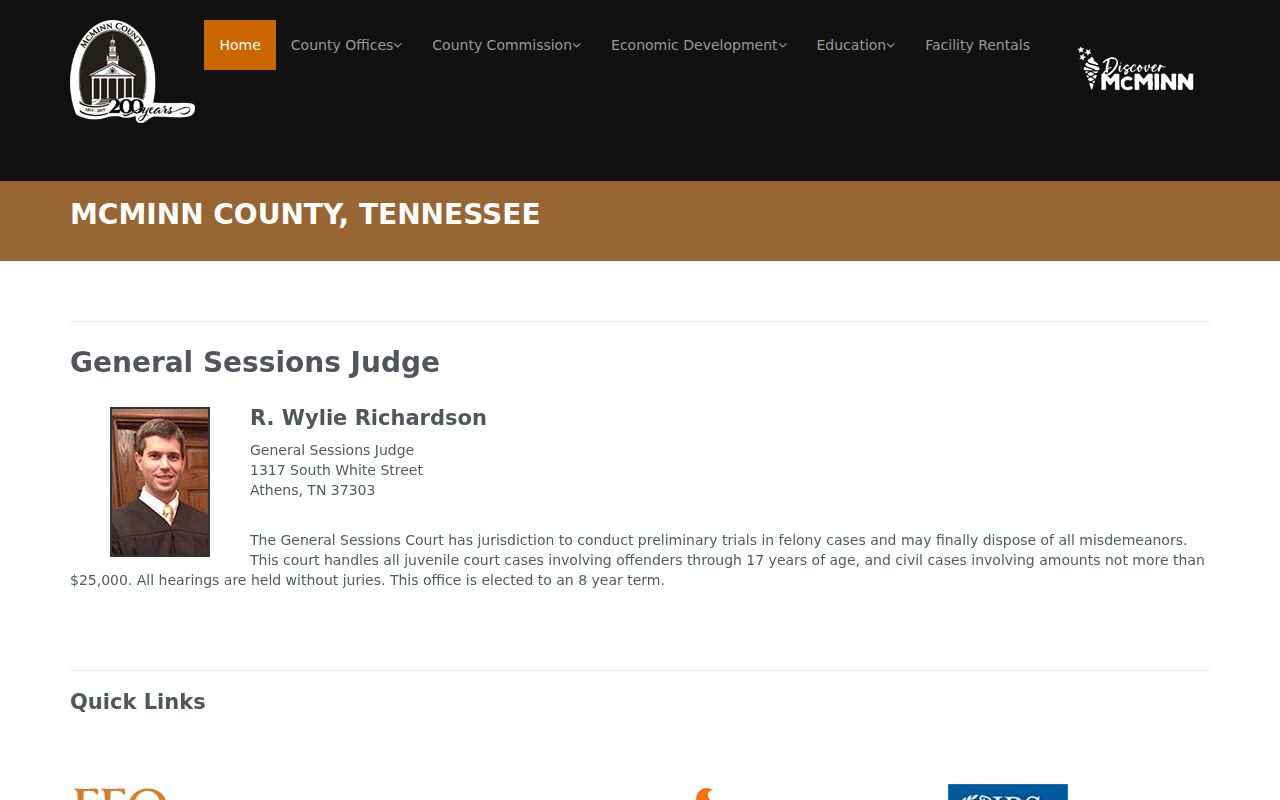
This distinction helps readers route a misdemeanor or preliminary felony request to the right McMinn County file.
What the Case File Shows
A McMinn County criminal case file centers on the prosecution, not jail intake. It can identify the court, case number, charge, key events, final outcome, and sentence. A public financial ledger may show costs, fines, restitution, and payments. Protected identifiers, victim or minor data, juvenile content, and sealed material may be redacted or withheld.
| Case Number & Court | Division, filing date, status, and judge |
|---|---|
| Charging Document | Complaint, warrant, indictment, charge text, and TCA section |
| Docket Entries | Chronological filings, motions, settings, pleas, and orders |
| Hearing Dates | Arraignment, preliminary hearing, trial, and later settings |
| Disposition & Judgment | Conviction, dismissal, nolle prosequi, acquittal, or no true bill |
| Sentence & Conditions | Custody, probation, credits, terms, and sentence relationships |
Read McMinn County Dispositions
Short terms can change the meaning of a McMinn County court record. A disposition is the result of a charge. “Disposed” means the matter concluded, but it does not tell whether the outcome was guilt or dismissal. Read the judgment or order with the docket.
- Nolle prosequi
- The prosecutor formally chose not to continue that charge.
- No true bill
- The grand jury declined to indict.
- Bound over
- The felony moved from Sessions toward grand-jury or Criminal Court action.
- Capias
- A court command to take a person into custody, often tied to a missed setting or violation.
Those outcomes differ from a conviction and should not be reduced to the original booking allegation.
A plea is the defendant's formal response to a charge. An indictment is the grand jury's formal felony charging paper, while a complaint may start the earlier process. The sentence section can state jail or prison time, probation, credits, and whether terms run at the same time or one after another. Read each term in the order it appears on the docket because one label rarely tells the whole McMinn County case story.
The official judges source shows the district bench tied to these McMinn County matters.
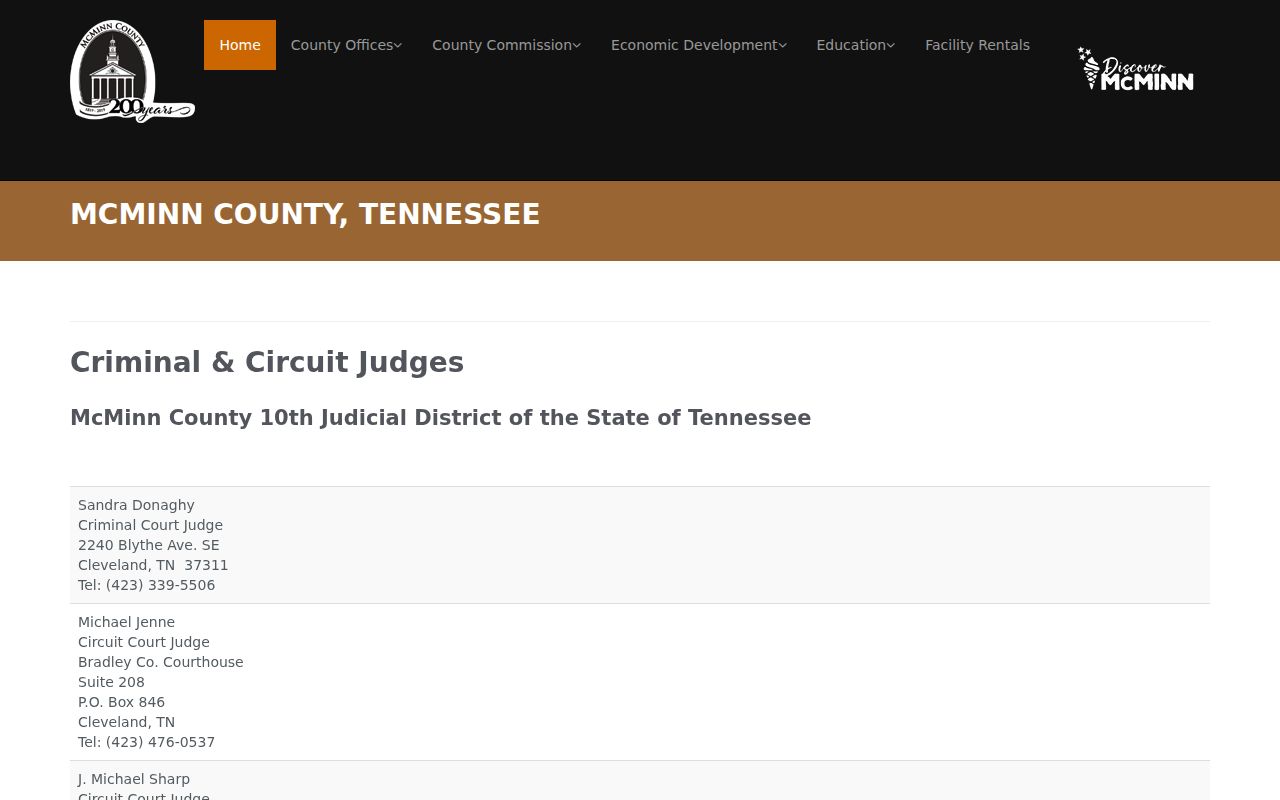
The image supports court identity, while the clerk's filed judgment remains the outcome source.
Note: “Disposed” means the case ended; it does not identify whether the result was conviction, dismissal, or acquittal.
Stages of a Criminal Case
A McMinn County prosecution proceeds by legal steps, and each step may add a new docket entry or paper. General Sessions handles the early felony stage. A grand jury may return an indictment, after which Criminal Court handles arraignment, motions, plea or trial, judgment, and sentence. Not every matter passes through every step because a count may be dismissed or resolved sooner.
Case flow: Charges Filed › Arraignment › Pretrial › Plea or Trial › Disposition › Sentencing
Booking charges can change during that flow. For the arrest and custody side, use the separate McMinn County arrest history resource, then return to the clerk file for the filed count and result.
Federal Cases Beyond McMinn County
Federal prosecutions are not held in the McMinn County clerk's trial file. McMinn County lies in the Eastern District of Tennessee. The PACER system is the official federal docket gateway, while the Eastern District court site provides district information. PACER requires an account and charges $0.10 per page, subject to its quarterly waiver rules.
The PACER source shows the federal case-record access point.
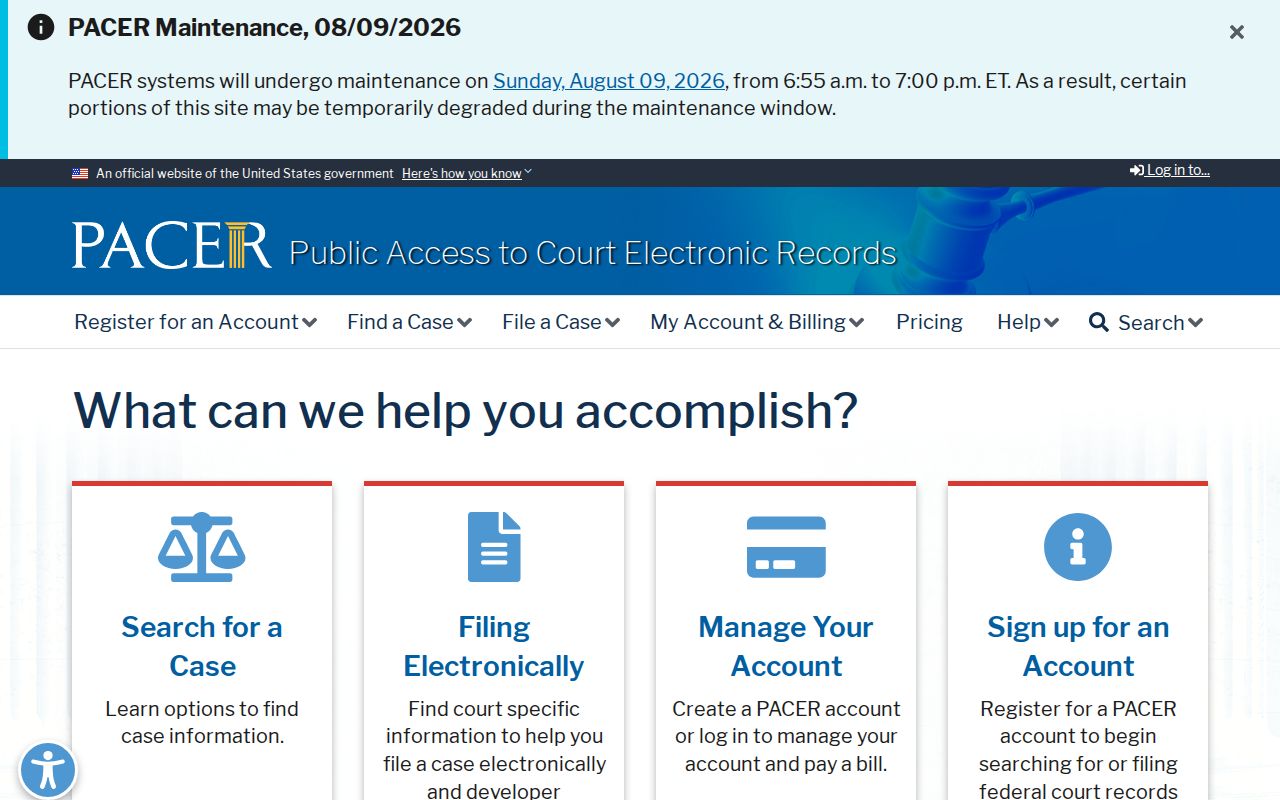
Use it only for federal matters, not as a substitute for McMinn County Sessions or Criminal Court.
The Eastern District source identifies the federal court serving the county.
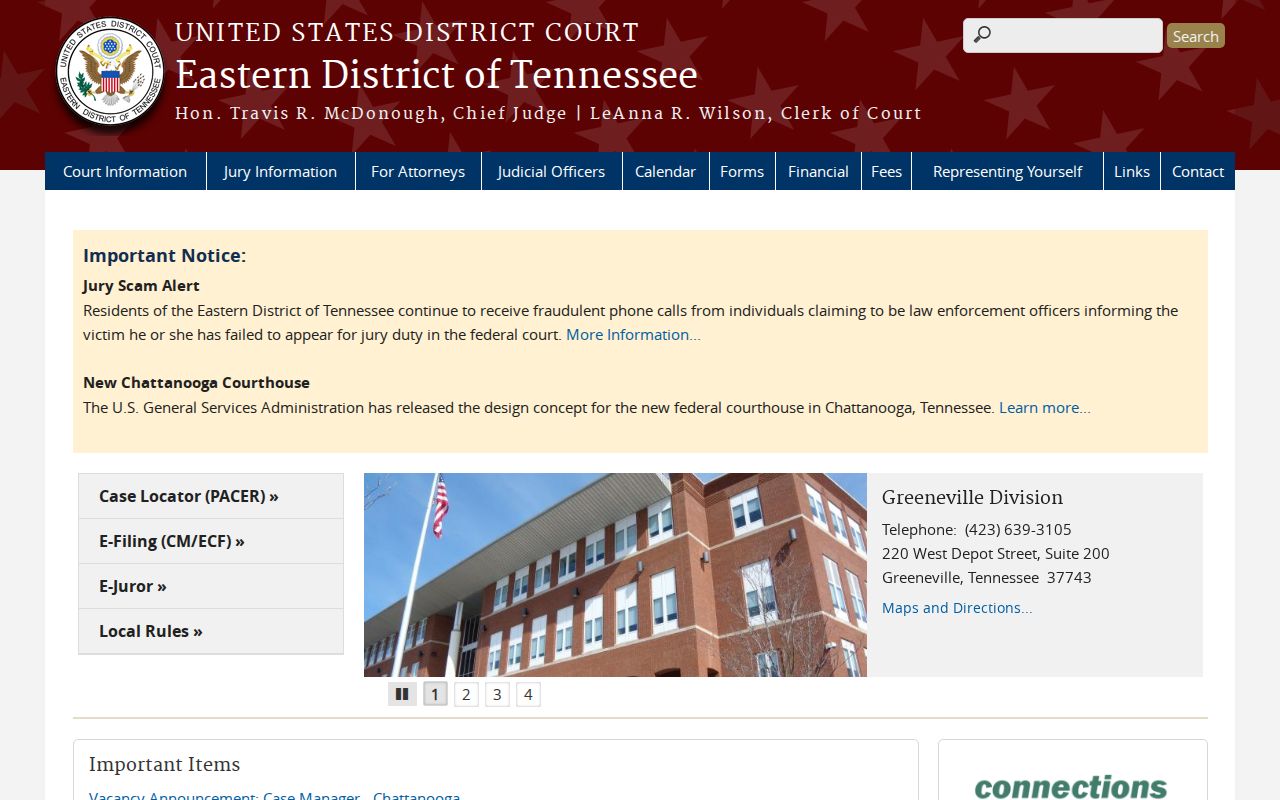
That separate system explains why a federal docket will not appear at the local clerk counter.
Archived McMinn County Case Records
Older McMinn County criminal case records may be archived and need advance retrieval. Call the clerk before traveling. Give the known case number, court division, name, and narrow date range. Ask whether the file can be inspected at the counter and whether a requested copy can be sent or must be collected.
A missing current index entry does not prove that no file exists. It may sit under a prior Sessions number, a later Criminal Court number, an archive index, or a lawful access restriction.
Note: Call the clerk before requesting an older file because archive format, retrieval time, and copy availability can vary.
Access & Restrictions
Tennessee Supreme Court Rule 34 governs public access to court records and the administration of redactions. The Tennessee Public Records Act also creates broad access to state and local records, but a general records demand does not replace the clerk's court procedure. Ask for an identifiable McMinn County file, document, or date range.
Juvenile records, expunged cases, Social Security and financial-account data, protected victim or minor information, and sealed material can be withheld or redacted. If a case does not appear, ask whether it is archived, filed under another court number, restricted, or expunged. Do not assume that a missing public result proves the event never occurred.
For self-review, a certified McMinn County disposition is stronger proof of the local outcome than a name-only possible match from a state history search.
Expunged matters are removed from public access through the court process set by Tennessee law. A dismissal, nolle prosequi, no true bill, or not-guilty result may qualify, but the relief must still be completed and routed to the affected agencies. Begin with the clerk in the court where the McMinn County charge was held. One eligible count does not make every count disappear, and a public searcher should never try to work around a sealing or expungement order.